Quick answer
Uprights move standing on a dolly, padded and strapped. Grands go on their side on a padded piano board with the legs and pedal lyre removed. Measure every door, turn and stair first, tell the mover about steps and gates, keep the piano out of a hot truck, and wait a couple of weeks before tuning.
Good piano movers in Coral Springs start with a tape measure, not a dolly. The route sets the plan: door widths, the turn at the top of the stairs, the step at the front threshold and how far the truck can park from the door. A piano is heavy, top-heavy and expensive to repair, and most of the risk sits in the first and last 30 feet.
South Florida adds one more variable. Humidity moves the wood and the strings, so a piano that arrives safely still needs a little time before it sounds right. Here is how to plan the whole job, from measuring to the first tuning.
Upright or grand: two different jobs
Tell the mover exactly what you have. A small spinet and a concert grand are both "a piano" on a booking form, but they need different crews and equipment.
| Piano type | How it travels | Crew and equipment | Watch out for |
|---|---|---|---|
| Spinet or console | Upright on a dolly, padded and strapped | Usually two or three movers | Lightest, but still top-heavy on stairs |
| Studio or full upright | Upright on a dolly, padded and strapped | Usually three movers, straps, sometimes a stair board | Tall cabinets tip easily on slopes and thresholds |
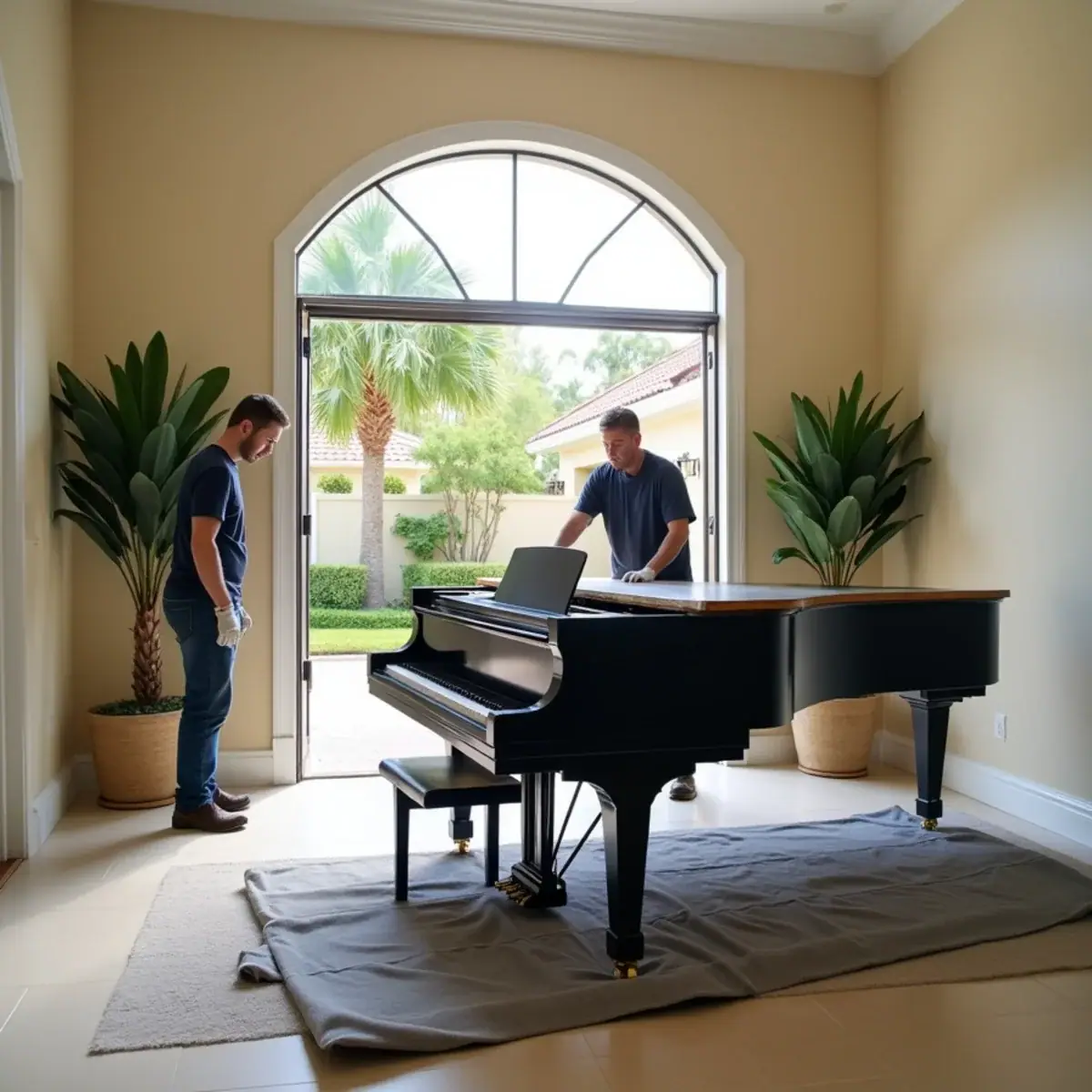
| Grand or baby grand | On its straight side on a padded piano board, legs and pedal lyre removed | Three or more movers, piano board, straps, tools | Legs and lyre must be reattached carefully; lid hinges and music desk come off or get secured |
A grand is never rolled across a room on its own legs. Those legs are not built for sideways force, and a snapped leg can drop the whole instrument.
Measure the route before anyone lifts
- Measure the piano: height, width and depth for an upright; length, width and the flat-side depth for a grand.
- Measure every doorway on the route, including the front door with the door open.
- Check turns: hallway corners and the landing at the top or bottom of the stairs.
- Count the steps inside and outside, including the single step at the threshold or patio.
- Walk the outside path: pavers, grass, gravel or a slope from the driveway.
- Note where the truck can park, and how far that is from the door at both addresses.
Send these numbers and a few photos to the mover before move day. They decide crew size, equipment and time far more than the piano's brand does.
Stairs, tight turns and gated drives
Stairs
Stairs are where piano moves get dangerous. A second-floor delivery, or even three steps at a sunken living room, usually means an extra mover and a slower pace. Say so up front; a crew that arrives expecting a ground-floor job may not have the people or equipment for it.
Tight turns
Many 1980s Coral Springs homes have narrow hallways and a tight turn from the foyer. Sometimes a door has to come off its hinges. Ask the crew whether that is likely and who puts it back.
Gates and long carries
In gated communities the truck may not reach the door, and a long roll across pavers is hard on a piano. Large Parkland homes often combine both: a gatehouse and a long driveway. See movers in Parkland for how those deliveries are usually planned.
Humidity, heat and the first tuning
A piano is mostly wood under tension. When humidity and temperature change, the soundboard swells or shrinks and the pitch drifts. A move changes both at once.
- Keep the time in the truck short. A closed truck in a Broward summer gets very hot. Ask for the piano to be loaded last and unloaded first.
- Avoid moving in rain. Pads help, but a wet piano is a problem. Watch the afternoon storm window in summer.
- Place it well. An inside wall, away from air-conditioning vents, exterior doors and windows that get direct sun.
- Keep the air conditioning steady. A house that swings between cold and humid is hard on the instrument.
Wait before you tune
Let the piano settle in its new room for a couple of weeks before booking a tuner. Tuning it the day after the move usually means tuning it again a few weeks later.
Protecting the piano, the floors and the rest of the house
- Close and lock the lid if it has a key, and remove the music desk on a grand if the crew asks.
- Empty the bench and pack sheet music, metronomes and lamps separately.
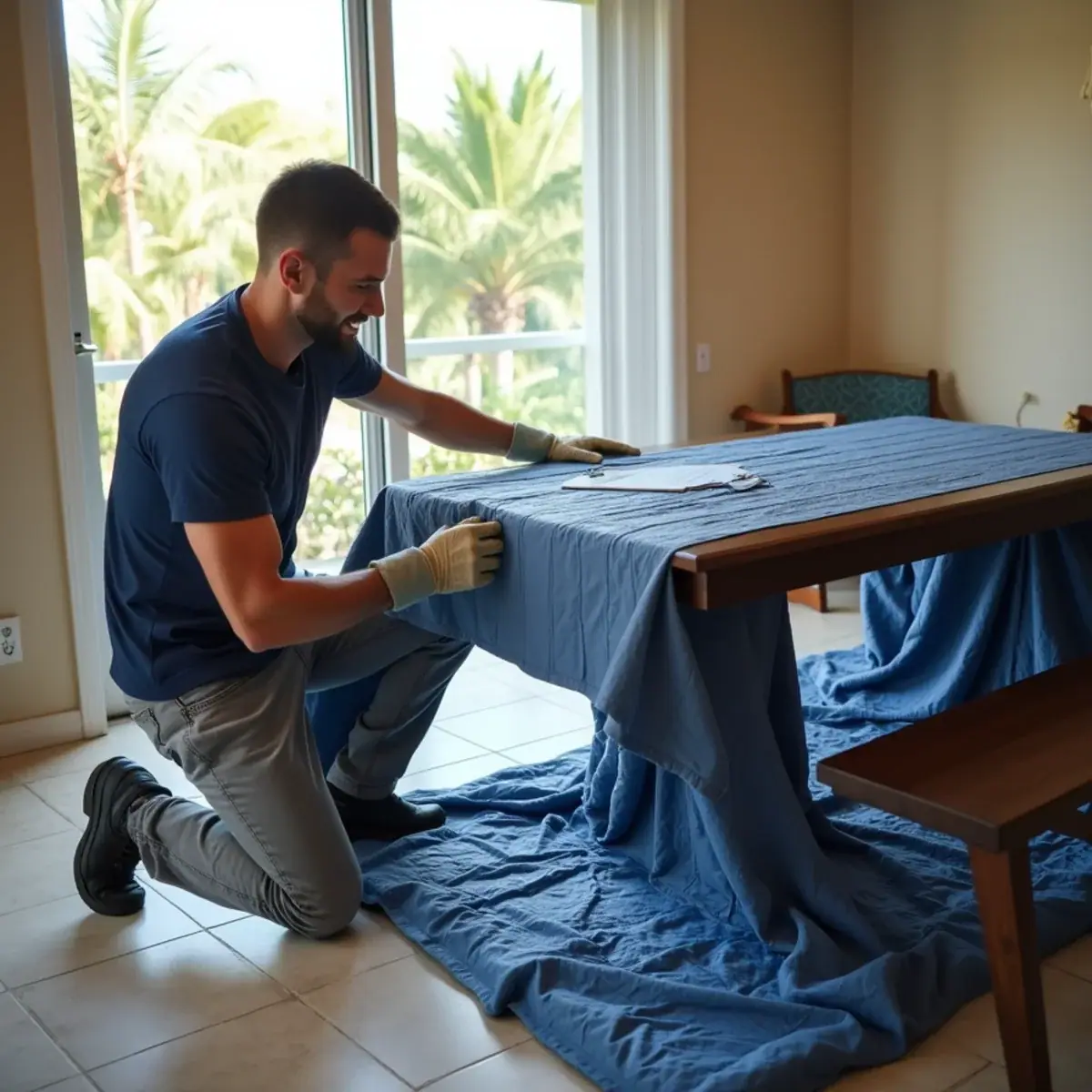
- Expect pads under the straps; plastic wrap should never sit directly on a polished finish.
- Ask for floor runners or boards on tile and wood floors along the route.
If the piano is part of a full household move, packing services can box the rest of the room so the crew has a clear path on the day.
Valuation for a high-value instrument
Standard valuation on many moves pays far less than a good piano is worth. Settle this before move day, not after.
- Tell the mover the piano's make, model and approximate value when you ask for the estimate.
- Read the valuation terms in the written estimate and contract. Ask whether high-value items must be listed separately.
- Ask what fuller protection would cost and what it excludes.
- Check whether your homeowner's policy or separate moving insurance covers the instrument in transit.
- Photograph the finish, keys and legs before the crew wraps it.
Our furniture movers page covers pianos alongside safes, pool tables and other heavy pieces. Not legal advice; your contract sets the terms.
Choosing the crew and planning storage between homes
Questions to ask before you book
- How often does the crew move pianos, and has it moved your type, upright or grand, recently?
- What equipment comes on the truck: a piano board, a dolly rated for the weight, straps, a stair board, padding?
- Who takes off and reattaches the legs, lyre and pedals, and who levels the piano afterward?
- Is the piano a separate line on the written estimate, with its own stair or long-carry charge?
- How will it ride in the truck: strapped upright against the wall, or on its board for a grand?
If the piano has to wait
Closings and lease dates do not always line up, and sometimes the piano needs a place to sit for a few weeks. A standard storage unit in a Broward summer is a poor home for it. Ask for climate-controlled storage and find out how the facility actually holds temperature and humidity, not just whether the sign says climate controlled.
Ask where the piano will sit (away from exterior walls and roll-up doors is better), whether it stays wrapped, and whether the same crew redelivers it. Steady conditions matter more than any single number on a thermostat. Moving it out of state instead? The same questions apply, plus how often it is handled on a shared truck; see long distance movers.
The part of a piano move people underestimate
It is rarely the staircase. It is the single step at the front door, the lip of a sliding-door track or the slope where the driveway meets the walk. Those small changes in level are where an upright tips and where a grand on its board shifts. Point them out to the crew lead at the walkthrough.
And skip the moving-day favor from friends. A piano that tips can injure people and gouge a floor, and none of that is covered when nobody hired anyone.
Quick answers
How long should I wait to tune a piano after moving it?
Give it a couple of weeks in its new room before booking a tuning. The move changes temperature and humidity, and in South Florida the soundboard needs time to settle to the new space. Keep the air conditioning steady and the piano away from vents and sunny windows during that time so the tuning holds.
Can movers take a grand piano up a flight of stairs?
Often yes, with the right crew and equipment. The legs and pedal lyre come off, the piano is strapped to a padded piano board on its side, and an extra mover usually handles the stairs. Measure the stairway width, ceiling height and the landing turn first, and tell the mover about the stairs when you ask for the estimate.
Is my piano covered if it is damaged in the move?
Only as far as the valuation terms in your written contract allow, and basic valuation often pays far less than a piano is worth. Tell the mover the make and value before move day, ask about fuller protection, and check whether your homeowner's policy or separate moving insurance covers it. Photograph it before wrapping.
Can regular movers move a piano?
Some can, and many should not. Ask whether the crew moves pianos regularly and what it brings: a piano board, straps, a dolly sized for the weight and plenty of padding. A spinet on a ground floor is a job many local crews handle well. A grand, or any piano going up or down stairs, calls for a crew that does this work often.
Plan the piano move around the route
Measure the route, name the stairs and gates, keep the piano out of the heat and give it a couple of weeks before tuning. When you call Coral Go Movers, we match you with an independent local mover that handles pianos, and that mover gives you a written estimate with crew size and valuation terms before move day. Every mover we send is registered with the State of Florida as required and insured. For piano movers in Coral Springs, call (831) 293-1195.