Quick answer
Mover valuation is the mover's limited liability for your goods, not insurance. On interstate moves you choose released value, which federal rules set at 60 cents per pound per article, or full value protection. Florida law separately requires movers to carry cargo insurance. For more protection, ask about third-party moving insurance and check your homeowner or renter policy.
Here is the short version of moving valuation coverage in Florida: the protection that comes with a move is the mover's liability, and it is usually far less than what your things cost to replace. Valuation decides how much the mover owes if something is lost or broken. Insurance is a separate product you may or may not need. The difference only matters on the day a dresser arrives cracked, so sort it out before the truck is loaded.
Below: what Florida requires of movers, how the federal options work on out-of-state moves, and the rules for high-value items and boxes you pack yourself. This is general information, not legal advice. The mover's written estimate and contract set the actual terms.
Valuation, cargo insurance and moving insurance: four different things
People say "moving insurance" for anything that pays when something breaks. There are really four separate layers.
| Layer | What it is | Who pays for it | What to ask |
|---|---|---|---|
| Mover's valuation | The mover's liability for your goods, set by the option you pick in the contract | Basic level is usually included; fuller options cost extra | Which option is on my contract, and is there a deductible? |
| Mover's cargo insurance | The mover's own policy that backs its liability, required by Florida for in-state moves | The mover | Is the policy current, and can I see a certificate? |
| Third-party moving insurance | A separate policy bought from an insurer, not the mover | You | Does it cover breakage, and does it cover boxes I packed? |
| Homeowner or renter policy | Your existing policy, which may or may not extend to goods in transit | You, already | Are my belongings covered while they are on a moving truck? |
Only the first layer is chosen on the mover's paperwork. Never assume the other three.
What Florida law requires for in-state moves
Moves that start and end in Florida fall under Chapter 507 of the Florida Statutes, enforced by the Florida Department of Agriculture and Consumer Services (FDACS). A few points matter for coverage:
- Cargo liability insurance. Florida law requires movers to carry cargo liability coverage of at least $10,000 per shipment, along with vehicle liability insurance.
- A written estimate and contract before work starts. The mover prepares it, it itemizes the charges and services, and you sign it before anything is loaded.
- Registration. Every mover and moving broker must register with FDACS. Every mover we send is registered with the State of Florida as required and insured.
The $10,000 figure is a floor, not a promise
Florida's at-least-$10,000-per-shipment requirement is the minimum insurance a mover must carry. It does not mean every item in your home is replaced at full price. What you get back on a claim depends on the valuation option and terms in your contract. Not legal advice.
Released value vs full value protection on interstate moves
Leaving Coral Springs for Georgia, the Carolinas or anywhere out of state puts the move under federal rules from the Federal Motor Carrier Safety Administration (FMCSA). Interstate movers must offer two levels of liability. Our long distance movers page covers the rest of the interstate paperwork.
Released value: included, but thin
Federal rules set released value at 60 cents per pound per article, at no extra charge. You only get it if you sign a waiver choosing it. The math is by weight, not price, so a 50-pound flat-screen TV is worth exactly the same as 50 pounds of paperbacks. For electronics, art and good furniture, that is a small fraction of replacement cost.
Full value protection: the federal default
If you do not sign the released-value waiver, full value protection applies. The mover is liable for the replacement value of lost or damaged goods, up to the total declared value of the shipment. For a damaged item, the mover may:
- Repair it,
- Replace it with a similar item, or
- Pay you the current market cost of replacing it.
It costs extra, and a deductible can lower the price. Get the cost, declared value and deductible in writing.
High-value items and the over-$100-per-pound rule
Under full value protection, federal rules let a mover limit its liability for items of extraordinary value, meaning anything worth more than $100 per pound, unless you list those items on the shipping documents. Jewelry, a watch collection or a laptop can cross that line.
- Walk the house with a notepad before the estimate and mark anything small and expensive.
- Ask the mover how to declare those items, and make sure they appear on the inventory.
- Photograph each one, with serial numbers where they exist.
- Better still, carry jewelry, cash, documents and small valuables in your own car.
This comes up constantly with the large gated-community homes just north of us. A move out of a Parkland, FL home can include art, a piano and a home office full of electronics. Heavy specialty pieces deserve their own conversation with furniture movers who handle pianos and safes, including how each one is wrapped and declared.
Boxes you pack yourself: the PBO gap
Movers often limit liability for boxes marked packed by owner (PBO). If you packed it, the mover can argue the damage came from how it was packed, not how it was handled. Unless the outside of the carton shows obvious damage, such as a crushed corner or a puncture, a claim for broken dishes inside a sealed PBO box can be hard to win.
- Read the contract section on owner-packed cartons before you start packing.
- Pack fragile items to the standard a crew would use: double-wall cartons, plenty of paper, no rattling.
- Consider having the crew pack only the kitchen, china and art, and do the rest yourself.
Check the box before you sign
At delivery, look at every carton for crushed corners, wet spots or tears and write them on the delivery receipt before you sign it. A clean signature on a damaged box weakens a later claim.
Third-party moving insurance and your own policy
Third-party moving insurance comes from insurers, not movers, and can cover risks valuation does not. Before buying any, call the company that holds your homeowner or renter policy. Some policies cover belongings in transit, some limit it, and some exclude it. Ask four questions:
- Are my belongings covered while they are in a mover's truck or storage?
- Does the coverage include breakage, or only fire, theft and collision?
- Is there a per-item cap on jewelry, art or electronics?
- What documentation do you need if I file a claim?
Get the answers by email. If there is a gap, compare a third-party policy with the mover's full value protection.
How to pick a coverage level for your move
The right level depends on what rides on the truck, not on how big the move is.
Florida's floor on in-state moves
Section 507.04 of the Florida Statutes says a mover may not limit its liability below 60 cents per pound per article. The mover must disclose that limit in writing when the estimate and contract are signed, including what the valuation costs, the rate it pays and your opportunity to reject it. If that disclosure is not on the paperwork, ask for it before move day. Not legal advice.
| Your situation | Coverage to look at | Why it matters |
|---|---|---|
| Older furniture, books and clothes | The basic per-pound level may be enough | Replacement cost is low compared with weight |
| Newer sofas, TVs, computers, a good dining set | Full value protection or added valuation | Light, expensive items are where per-pound limits fall shortest |
| Jewelry, art, collections | Declare them in writing, or carry them yourself | Undeclared high-value items can be capped |
| Mostly boxes you packed | PBO terms plus your own insurance | Owner-packed cartons are often limited |
Exclusions worth asking about
- Damage that existed before pickup, which is why the inventory records condition item by item.
- Electronics and appliances that stop working with no visible outside damage.
- Weather and other events outside the mover's control, depending on the contract wording.
If the fragile rooms worry you most, letting the crew pack them through professional packing services closes much of the owner-packed gap.
What a moving coordinator watches for on coverage
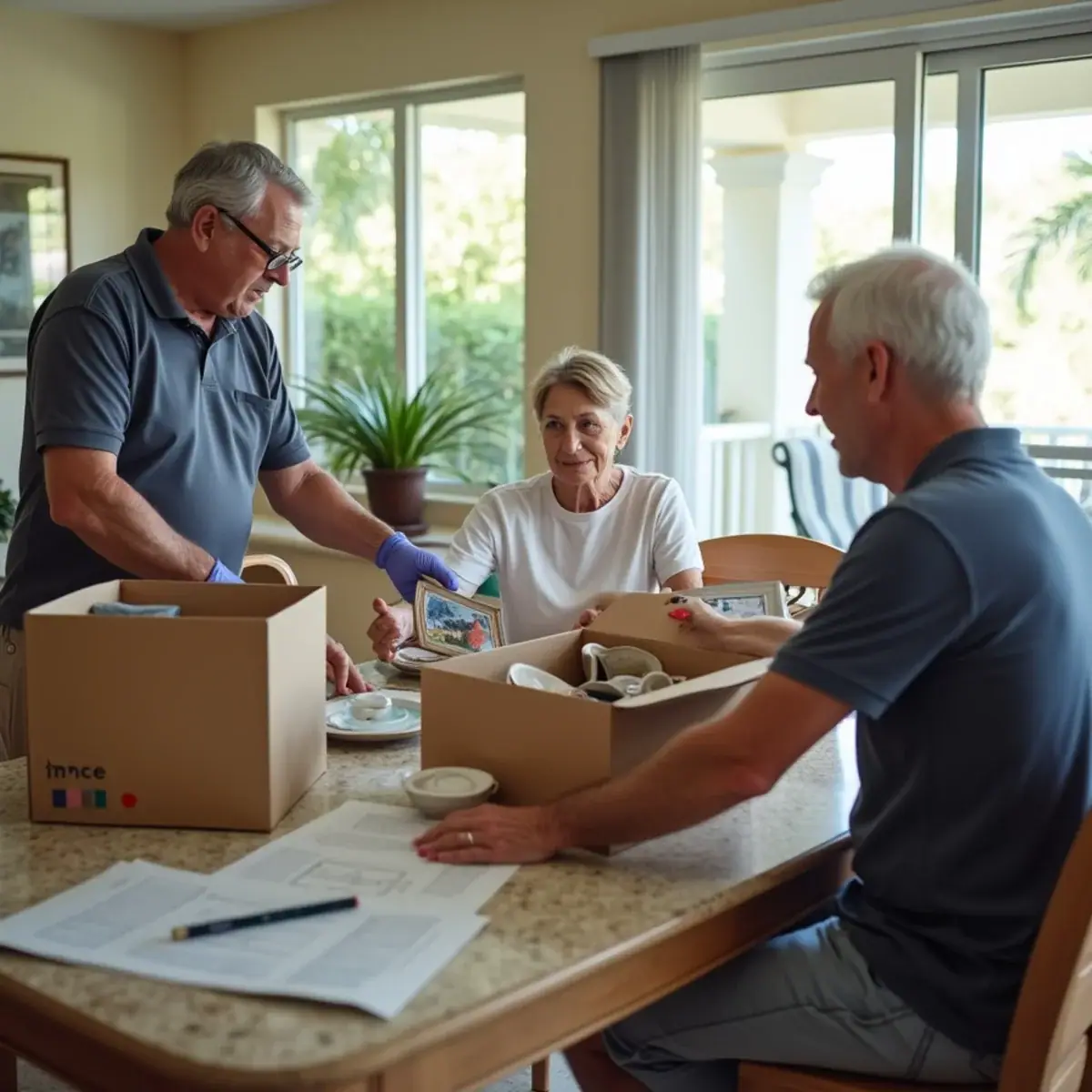
The valuation choice usually gets made on the driveway at 7:30 in the morning, crew waiting, clipboard in hand. That is when people sign the released-value line unread. Ask for the valuation options with the written estimate, days earlier, and decide at the kitchen table.
The second habit is documentation. Photograph furniture, TVs and artwork in their current condition before the crew arrives, including existing scratches. Keep the estimate, contract, inventory and photos together. If something does arrive broken, our guide to filing a moving damage claim in Florida covers the steps and deadlines.
Quick answers
Is moving valuation the same as moving insurance?
No. Valuation is the mover's limited liability for your goods, and its level depends on the option in your contract. Insurance is a separate policy from an insurance company. Florida does require movers to carry cargo insurance of at least $10,000 per shipment, but that backs the mover's liability. It does not turn released value into full replacement coverage for every item.
How much does released value pay if something breaks?
On interstate moves, federal rules set released value at 60 cents per pound per article. Payment is based on the item's weight, not its price, so a light but expensive item like a TV or a lamp returns very little. It costs nothing extra, but you must sign a waiver to choose it. Read that line carefully on move day.
Are boxes I packed myself covered by the mover?
Often only in part. Many movers limit liability for packed-by-owner boxes unless the carton shows obvious outside damage. Check the contract before packing, pack fragile items carefully, and consider having the crew pack the kitchen and breakables. Ask your homeowner or renter insurer, or a third-party moving insurer, whether they cover owner-packed boxes.
Does Florida set a minimum valuation for in-state moves?
Yes. Under section 507.04 of the Florida Statutes, a mover may not limit its liability for lost or damaged household goods to less than 60 cents per pound per article. The mover has to disclose that rate, what the coverage costs and your opportunity to reject it, in writing, when the estimate and contract are signed. Ask about added valuation if you want more. Not legal advice.
Know your coverage before the truck is loaded
Valuation is the mover's liability, Florida sets a minimum for the mover's own insurance, and real replacement-cost protection is something you choose or buy. Decide which layer you need, list your high-value items, and get every term in the written estimate from the mover. Call (831) 293-1195 and we will match you with a registered, insured local mover who can walk you through the valuation options before you book.