Quick answer
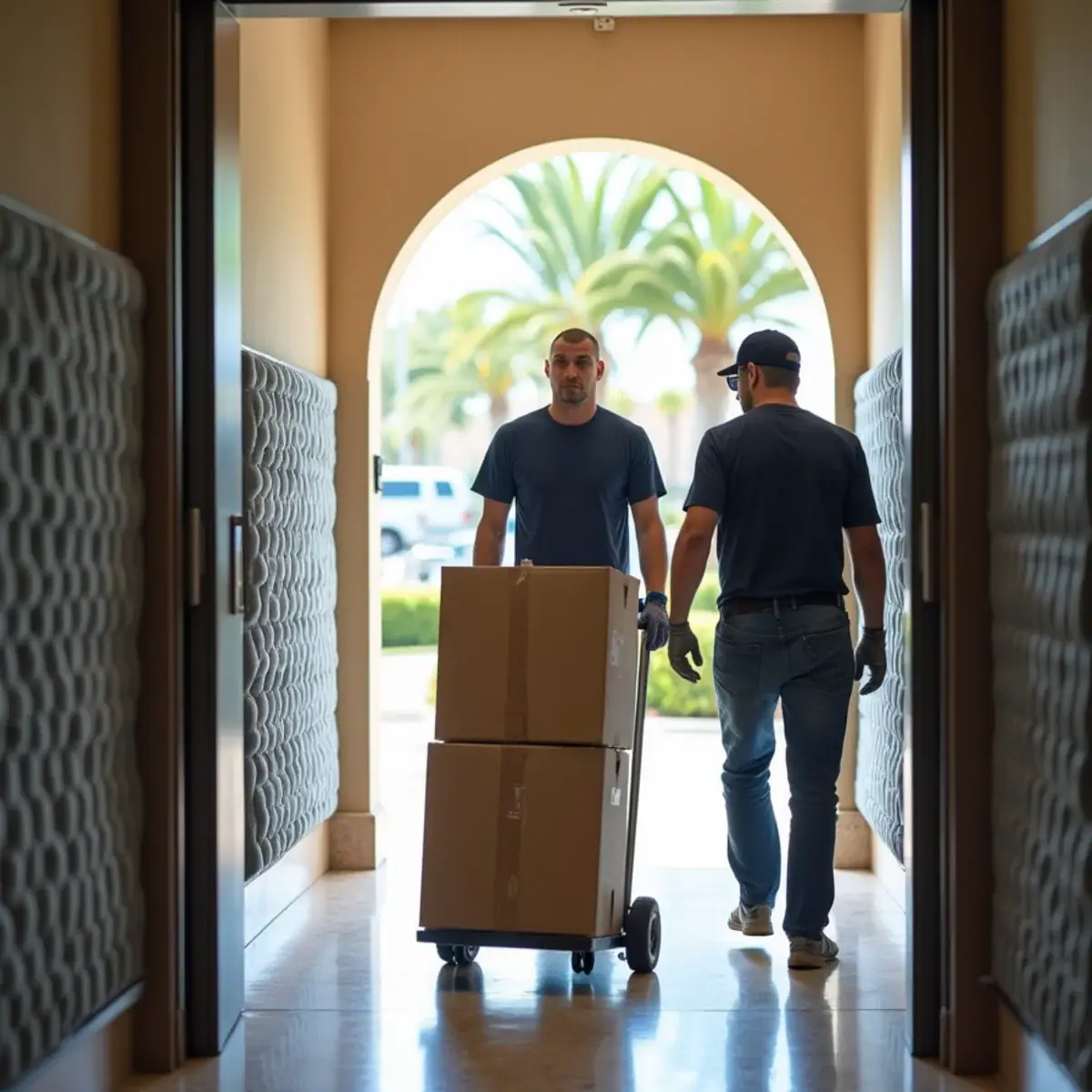
You can move during hurricane season in Florida, and most people here do, since June 1 to November 30 overlaps the busiest moving months. Book a morning start to beat the afternoon storms, choose a backup date, pack for rain and heat, and get the mover's rescheduling and cancellation terms in writing before you sign.
Moving during hurricane season in Florida is normal, not reckless. The season runs June 1 to November 30, and it overlaps the months when most South Florida moves happen. The day-to-day risk usually is not a named storm. It is the heat and the near-daily afternoon thunderstorms that roll across Broward in summer. Plan for those, hold a backup date, and get the storm terms in writing.
This guide covers choosing dates, a rain plan for loading, what happens when a storm threatens, and how to protect boxes and furniture in a hot truck. It is written for local moves around Coral Springs and its neighbors, from walk-up apartments to condos in Sunrise.
Picking a date inside hurricane season
Not every week of the season carries the same risk or the same demand. A rough calendar helps.
| Stretch | What to expect | Planning note |
|---|---|---|
| May to August | Peak moving months: heat, near-daily afternoon storms, the busiest crew calendars | Book early and take a morning start |
| August to October | Usually the most active part of the hurricane season | Keep a backup date and some slack in lease or closing dates |
| November | The season winds down and the drier months begin | Often an easier month to move |
| December to April | Outside hurricane season, cooler and drier | Industry pricing research suggests mid-week, mid-month dates in these months cost less |
If you can choose, a Tuesday in the middle of the month leaves more room to reschedule than a Saturday on the 30th. Weekend and month-end dates fill first, so a storm delay on those days can push you back further.
Start early: the afternoon storm rule
In a South Florida summer, mornings are cooler and drier, and storms often roll in after 2 or 3 pm. A crew that starts at 7 or 8 am can usually finish loading before the sky turns.
- Ask the mover for the first job of the day, not a midday start after another move.
- Have every box taped and staged the night before, so loading starts the minute the crew arrives.
- Load the things that cannot get wet first, while the weather is still clear.
- Expect the crew to pause when lightning is close. Carrying a dresser across a driveway in a lightning storm is not worth any schedule.
A rain plan for loading and unloading
Assume it will rain at some point, then plan so it does not matter. Our local movers in Coral Springs page explains how crews protect homes on a typical local move; these are the steps to ask about when the forecast looks wet.
- Stage under cover. Boxes wait in the garage or under a covered entry, never on the lawn or the driveway.
- Protect the floors. Ask the crew to lay floor runners and doorway protection at both homes. Wet shoes on tile and wood floors are where scratches happen.
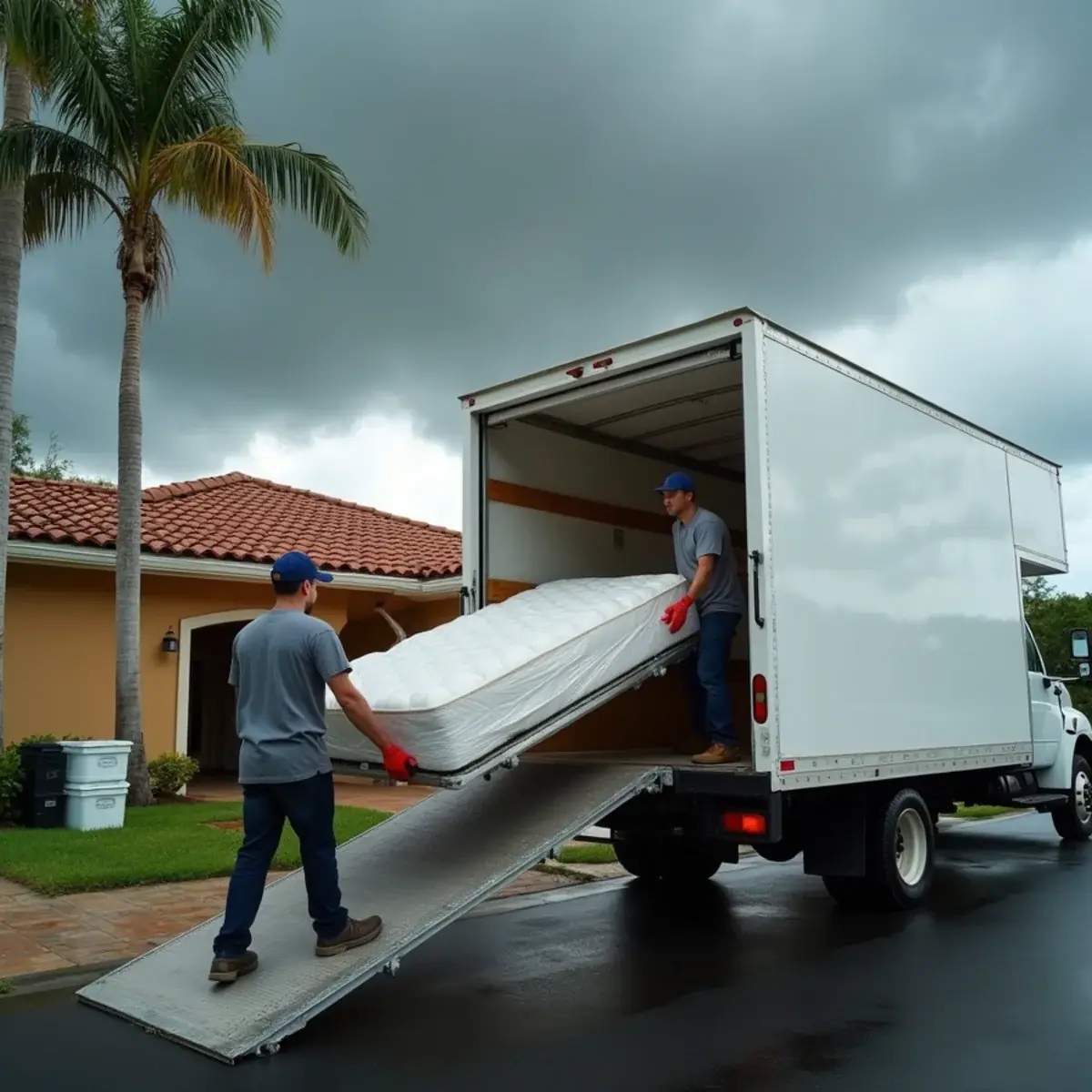
- Wrap upholstery and mattresses. Pads plus stretch wrap on sofas and chairs, and plastic bags on mattresses.
- Use plastic bins for what cannot get wet. Documents, electronics, photos and keepsakes travel better in lidded bins than cardboard.
- Shorten the wet carry. Have the truck park as close to the door as access allows.
- Keep towels and a mop at each door. A dry entry is safer for the crew and for your floors.
Heat and humidity: what not to leave in the truck
A closed truck in a South Florida summer gets very hot. Some things do not survive the ride.
- Ride with you: candles, vinyl records, wax, photos, medications, electronics, wine and houseplants.
- Do not pack at all: propane, paint, aerosols, gasoline, pool chemicals, ammunition and fireworks.
- Keep in your car: documents, valuables, chargers, water, snacks and a change of clothes.
Humidity also softens cardboard. Use fresh, sturdy boxes, keep packed boxes indoors in the air conditioning rather than in a hot garage for weeks, and do not overfill them. If time is short, the crew can handle the fragile rooms: our packing services page covers full and partial packing for kitchens, glassware and TVs.
Watches, warnings and a countdown to move day
The National Hurricane Center gives you more lead time than most people use. Its Tropical Weather Outlook looks seven days ahead for systems that could form, and once a storm exists, watches and warnings follow.
| NHC stage | What it means | What to do about the move |
|---|---|---|
| Tropical Weather Outlook | Areas that could develop this week | Check it daily the week before. If anything is marked near Florida, remind the mover of your backup date. |
| Tropical storm or hurricane watch | Storm conditions are possible in the area, generally in the next 48 hours | Call the mover and both buildings. Decide whether to move earlier, hold, or switch to the backup date. |
| Tropical storm or hurricane warning | Storm conditions are expected, generally in the next 36 hours | Assume the move will not happen in that window. Get the new date and your deposit terms in writing. |
| Watches and warnings lifted | The threat has passed the area | Check both routes for flooding and confirm both buildings have reopened for moves. |
Buying a home? Watch the insurance, too
Many Florida insurers pause binding new homeowners policies once a named storm threatens the state, often when a watch or warning goes up. A closing that needs a new policy can slip a few days, and the move slips with it. Ask your agent or title company how the carrier handles it, and set the mover's backup date a couple of days after closing.
When a storm is forecast: rescheduling and delays
If a tropical storm or hurricane watch goes up for Broward, expect plans to shift. Buildings may pause moves while shutters go up, roads can flood in heavy rain, and crews will not drive into dangerous weather. The question is what your paperwork says when that happens.
Ask the mover before you sign
- What happens to my date if a watch or warning is issued for the area?
- Does my deposit carry over to the new date, or is it refunded?
- Who decides to postpone, and how much notice will I get?
- If my things are loaded and delivery cannot happen, where is the load kept, and is storage billed?
- Does the rate change if the new date falls on a weekend or at month-end?
Protect your lease and closing dates
Ask your landlord, buyer or title company now how a storm delay would be handled, and get any flexibility in writing. A one-day buffer between move-out and move-in is cheap insurance in September. This is practical advice, not legal advice.
Safety beats the schedule
Nobody should be carrying furniture in lightning or high wind, and a truck should not drive through flooded streets. Water depth is hard to judge from a cab. If roads at either end are under water, the move waits.
Sunrise moves: distance, docks and elevator slots
Sunrise sits at the edge of the area, about 20 to 25 minutes from Coral Springs down the Sawgrass Expressway. On the east side, the 1970s condo phases at Sunrise Lakes are a large 55+ community. On the west side, offices, newer apartments and towers around Sawgrass Mills run on loading docks and elevator slots.
In storm season that combination matters. A long drive plus a late elevator slot can push the unload right into the afternoon storm window. Ask the building for a morning slot and tell the mover about it. Our page on movers in Sunrise covers condo, apartment and office moves there.
What we see on summer moves around Coral Springs
The moves that go sideways in summer are almost never hit by a hurricane. They are hit by a 2 pm start. The crew loads in the heat, the storm arrives during the carry, and everything slows down while the clock keeps running. A morning start fixes most of that.
The second pattern is the missing backup date. People pick one day, sign a lease around it and have no plan B. Write a second date into your plan from the start and ask the mover whether it can hold it.
Third, buildings. Condo associations sometimes stop moves before a storm, and they do not always say so until the last minute. Keep the office's phone number handy and read our guide to condo and HOA moving rules in Broward for the paperwork that has to be in place first.
Quick answers
Is it a bad idea to move during hurricane season in Florida?
No. Hurricane season runs June 1 to November 30 and overlaps the busiest moving months, so a large share of South Florida moves happen inside it. The everyday problems are heat and afternoon thunderstorms, not named storms. Book a morning start, keep a backup date, and make sure the mover's written estimate explains what happens if weather forces a new date.
What happens if a hurricane is forecast for my moving day?
Usually the move is postponed. Crews will not work in dangerous weather, buildings may stop moves while they prepare, and flooded roads can block trucks. What happens to your deposit and date depends on the mover's written terms, so ask before you sign whether the deposit carries over, how much notice you get, and whether storage is billed if a loaded truck cannot deliver.
Will movers work in the rain?
Yes, in ordinary rain most crews keep working, using pads, stretch wrap, mattress bags and floor runners to keep things dry. They usually pause for lightning and stop in high wind or flooding. Staging boxes under cover and parking the truck close to the door both cut down how much gets wet. Ask the mover how it handles rain at both addresses.
When is the peak of hurricane season in South Florida?
The National Hurricane Center puts the statistical peak of the Atlantic season around September 10, with most activity between mid-August and mid-October. That stretch overlaps late-summer lease turnovers and the start of the school year. If your dates are flexible, a move in early summer or after mid-October usually carries less storm risk, though afternoon thunderstorms are part of any summer move.
Plan for storms, then book the date
Hurricane season is not a reason to avoid moving in South Florida. It is a reason to plan: an early start, a backup date, a rain plan, heat-sensitive items in your car, and storm terms in the mover's written estimate. Every mover we send is registered with the State of Florida as required and insured. Call (831) 293-1195 with your dates and addresses, and we will check which local crews have a morning start open.